Education
The Difference Between AC Repair and Replacement
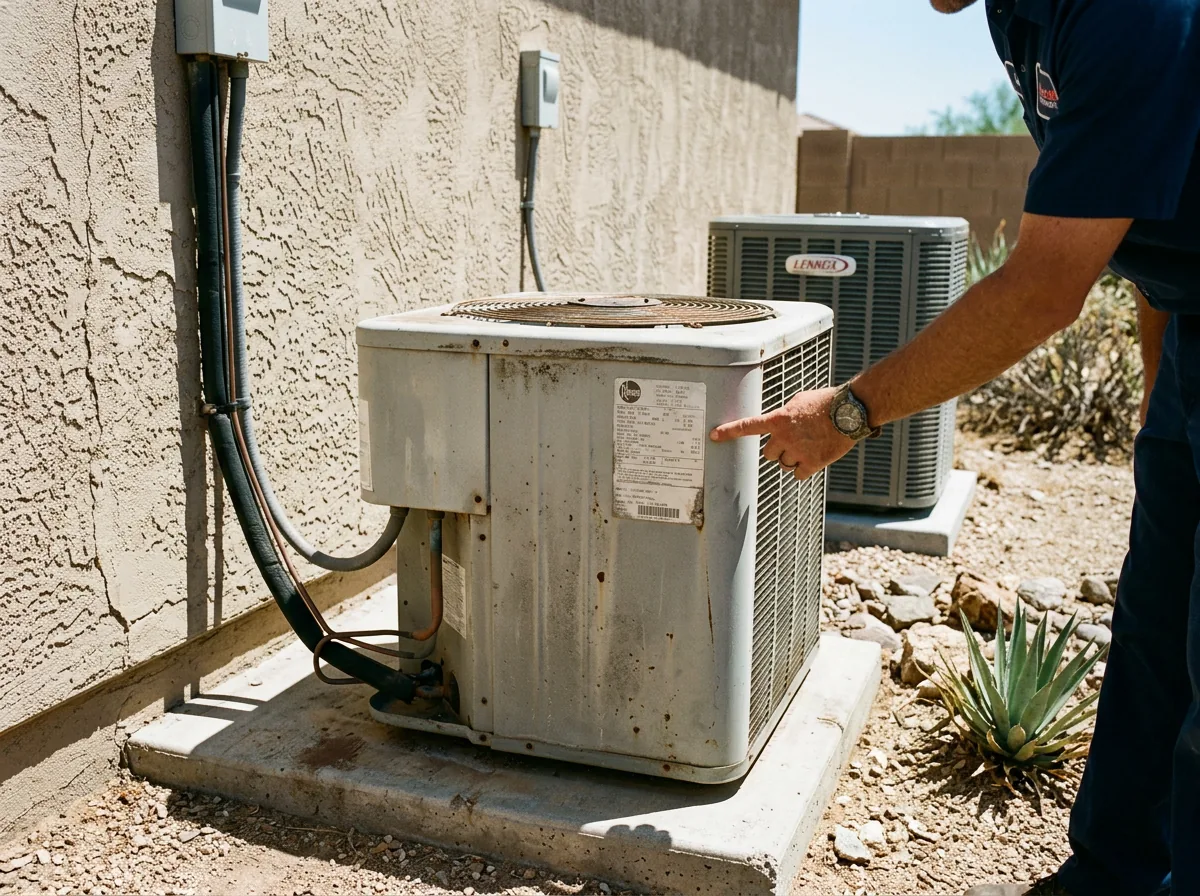
A $2,000 repair on a 12-year-old AC sounds painful. Here's the age-cost calculation Scottsdale techs use to decide when repair stops making sense.
The quote comes in: $2,000 to fix your 12-year-old AC unit. You wince. Then you wonder if you're just throwing money at a system that's going to strand you again next July when it's 115 degrees outside.
That's the question we get every summer. And the honest answer isn't always "replace it." Sometimes a repair makes total sense. Sometimes you're buying yourself one more anxious summer before you have the exact same conversation again. Here's how to think through it.
The Age-Plus-Cost Calculation
There's a rule most experienced HVAC techs use: multiply the repair cost by the unit's age in years. If that number tops what a new system would cost, replace it.
Run that math on your situation. $2,000 multiplied by 12 years is $24,000. A new system installed in the Scottsdale area typically runs somewhere between $5,000 and $10,000 depending on home size, brand, and configuration. Your repair cost clears that bar pretty easily.
That rule isn't perfect, but it's useful because it forces you to weigh future risk. A 12-year-old unit in the Phoenix desert has been through a lot. Summers here aren't gentle. A unit that runs hard from May through October, pushing through haboobs and monsoon humidity swings, ages faster than the same unit would in, say, Denver.
If your unit is under 10 years old and the repair is minor, fix it. If it's 15 years old and you're replacing a compressor, you're probably done.
What You're Actually Comparing
Most homeowners frame this as "repair cost vs. new unit cost." That's the right instinct, but it's only part of the picture. A few other things belong in that comparison:
- Efficiency. Units installed 10 or more years ago were built to older efficiency standards. Many are running at 10 to 13 SEER. New equipment sold in Arizona today must meet a minimum of 14.3 SEER2 under updated federal standards, and most quality installs land in the 16 to 18 SEER2 range. That gap translates directly to your APS or SRP bill every month.
- Warranty coverage. A repaired old unit has no manufacturer coverage left. A new unit typically comes with 10 years on parts and a labor warranty through your installer. That peace of mind is worth something real when you're heading into a Phoenix summer.
- R-22 refrigerant. If your old unit uses R-22 (Freon), you're dealing with a refrigerant that's been phased out. Supply is limited, prices are high, and any repair involving refrigerant is going to cost more than it used to. That's another thumb on the scale toward replacement.
- Reliability. One breakdown is a data point. A second breakdown on the same unit is a pattern. If you've already had one costly repair in the last couple of years, the next one usually isn't far off.
The ROI of a New High-Efficiency Unit
This is where the math gets interesting. Replacing a 10 SEER unit with a 16 or 18 SEER2 system can cut your cooling energy use by 30 to 40 percent. In Phoenix, cooling makes up a huge chunk of your summer electric bill. On an SRP time-of-use plan, those savings are amplified because a more efficient system cycles off faster and puts less load on your home during peak hours.
Rough payback timelines vary by home size, utility rate plan, and how much you ran the old unit, but many Scottsdale homeowners see the efficiency savings start to offset the cost of a new system within 7 to 10 years. That's a reasonable timeline when you're also getting 15 to 20 years of reliable life out of the new equipment.
Add in the repair costs you're avoiding, and that payback window shrinks further. A $2,000 repair today, plus another unexpected repair in 18 months, plus higher monthly bills the whole time... the numbers shift fast.
When Repair Actually Wins
To be fair, there are cases where repair is the right call.
- Your unit is 8 years old or less and in otherwise good shape.
- The repair is a straightforward component swap, not a compressor or coil replacement.
- You're planning to sell the home in the next year or two and just need it functional.
- The system is properly sized for your home and you've had minimal issues until now.
A good HVAC tech should be honest with you about where your unit falls. If someone's pushing you to replace a 7-year-old system over a capacitor, get a second opinion. If someone's encouraging you to patch a 14-year-old unit with a failing compressor, same deal.
Get an Honest Answer Before You Decide
We've told plenty of homeowners to repair instead of replace when the numbers made sense. We've also had the harder conversation when it didn't. Either way, you deserve a straight answer based on your actual unit, not a sales pitch.
If you're staring down a big repair quote on an older system, give us a call. We'll tell you what we'd do if it were our house. Reach us at (480) 272-1317 and we can usually get eyes on the unit same day or next day.
One thing you can do today: Find the data plate on your outdoor unit (usually on the side panel) and write down the model number and manufacture date. That tells you the unit's age and SEER rating, which is the first thing any tech will want to know when walking through the repair vs. replace decision with you.