Education
Top 5 Energy-Efficient AC Units for Arizona Homes
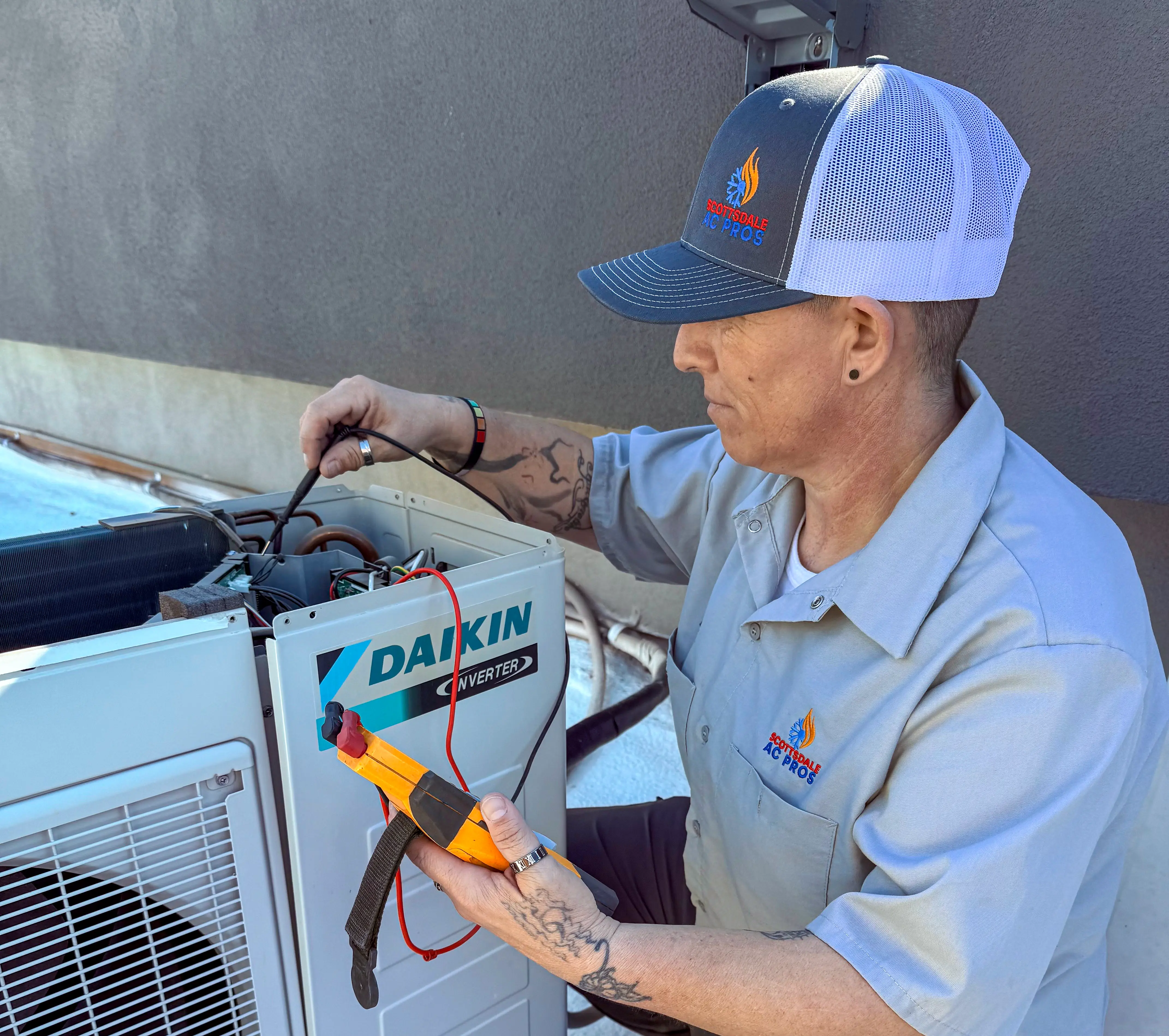
Most AC units sold in the U.S. are tested at 95°F outdoor temps. In Scottsdale, that's a pleasant spring afternoon. Here's what actually matters when choosing a unit for Arizona's extreme heat.
Not All AC Units Are Built for 115°F
Most AC units sold in the U.S. are tested in conditions nothing like Scottsdale. The industry tests at 95°F outdoor temps. That's a pleasant spring afternoon here. When your outdoor condenser is sitting in full sun on a July day with ambient temps pushing 115°F or higher, the performance gap between a good unit and a great one becomes obvious fast.
Arizona is one of the hardest environments on cooling equipment. Between the extreme heat, monsoon dust, and the sheer number of hours your system runs each year, you need a unit that's specifically suited to desert conditions. A system that performs well in Atlanta won't necessarily hold up in the Valley.
Here's what matters most when choosing a new AC for a Scottsdale-area home:
- High SEER2 rating (the new efficiency standard as of 2023)
- Strong performance at high ambient temperatures. Some units lose significant capacity above 110°F
- Durable condenser coils that resist corrosion from desert dust and hard water
- Variable-speed or two-stage compressors that handle long run cycles without short-cycling
- Solid warranty and local dealer support in the Phoenix metro
The Top 5 Units We Recommend for Arizona Homes
We install and service all major brands, but these five consistently perform well in our climate. We're looking at whole-home split systems in the 3-to-5-ton range, which covers most Scottsdale and Phoenix homes.
1. Trane XV20i
The variable-speed compressor is the real star of Trane's top-tier system. It adjusts output in tiny increments so it runs longer at lower capacity instead of blasting on and off. That means more consistent temps throughout your house and lower electric bills during those brutal July and August months when SRP demand charges spike. Depending on the matched indoor unit, SEER2 ratings land in the 21–22 range. Trane also builds their condensers to handle extreme heat, and their warranty support in Arizona is excellent.
2. Carrier Infinity 26 (24VNA6)
Carrier's flagship variable-speed unit is rated up to approximately 24 SEER2 (verify against current AHRI data for your specific configuration). It uses Carrier's Greenspeed intelligence to modulate between 25% and 100% capacity. In a well-insulated Scottsdale home, this thing sips electricity. The Infinity communicating thermostat that pairs with it gives you real-time energy use data, which is handy when you're trying to optimize around your APS or SRP time-of-use rate plan.
Here's the downside first: it's a premium price point, and Lennox parts can sometimes take longer to source. So why do we still recommend it? Because this unit has the highest efficiency rating you'll find in a residential AC right now. Lennox marketed it at 28 SEER under the old standard, under the current SEER2 calculation, that translates to roughly 26–27 SEER2, still the top of the chart. It uses a variable-capacity compressor and a variable-speed fan to match output precisely to your home's cooling load. If efficiency is your top priority and your home has good ductwork, this unit will deliver the lowest operating costs.
Daikin doesn't get as much name recognition as the others, but they're the largest HVAC manufacturer in the world by global revenue. The DX20VC is a variable-speed unit rated up to 24 SEER2, and Daikin's compressors have a strong track record for reliability in hot climates. They also offer a 12-year parts warranty when registered. We've been installing more Daikin systems in Paradise Valley and Arcadia lately, and homeowners are happy with them.
Say you're replacing a 15-year-old system and you want a real efficiency upgrade without going full flagship price. That's where the Rheem Prestige fits. It's rated up to 20 SEER2 with a two-stage compressor. Not variable-speed, but two-stage still gives you that low-and-slow operation on moderate days, which in Scottsdale means anything under 105°F. Rheem's EcoNet thermostat integration works well, and these units are widely available through local distributors, so parts and service are never an issue.
The Money Part: Rebates and Tax Credits
Now the part everyone asks about first: between utility rebates and federal tax credits, upgrading to a high-efficiency system costs less than most homeowners expect.
Federal Tax Credits (25C)
The Inflation Reduction Act extended the Energy Efficient Home Improvement Credit through 2032. How much you can claim depends on what you install:
- Central air conditioners: Up to $600 as a tax credit for units meeting CEE highest efficiency tier requirements. That's a dollar-for-dollar reduction on your taxes — not just a deduction.
- Heat pumps: Up to $2,000 for qualifying heat pump systems meeting the highest efficiency tier. If you're considering a heat pump instead of a straight-cool AC (and they're increasingly popular in Arizona), the credit is significantly larger.
The five AC units listed above would fall under the $600 central AC credit, assuming they meet the current efficiency thresholds. Reach out to us and we can help you figure out exactly what your chosen system qualifies for.
SRP Rebates
Salt River Project offers rebates for qualifying high-efficiency cooling equipment. Rebate amounts vary by system type and efficiency level, so check SRP's current rebate page or ask us, we process these regularly and can tell you exactly what your system qualifies for. SRP also offers rebates for smart thermostats and duct sealing, which pair well with a new system install.
APS Rebates
Arizona Public Service runs similar rebate programs for high-efficiency AC and heat pump installations. Amounts depend on the equipment specs and can change by program year, so verify current offers before making a decision.
Manufacturer Rebates
Trane, Carrier, and Lennox all run seasonal promotions — usually in spring and fall — with rebates that can be stacked on top of utility and federal incentives. We keep track of these and will let you know if there's an active promotion when you're ready to buy.
When you combine federal tax credits with utility rebates and manufacturer promotions, the net cost of a high-SEER2 system gets a lot closer to what you'd pay for a basic builder-grade unit. The difference is you'll be saving on electricity every month for the next 15-20 years.
Ready to Upgrade? Let's Talk Numbers
Square footage, insulation, ductwork condition, sun exposure, even which direction your house faces — all of it affects which unit is the right fit. We'll do a full load calculation and walk you through the options so you're not guessing.
Contact Scottsdale AC Pros or call us at (480) 272-1317 for a free quote on a new high-efficiency system. We serve Scottsdale, Phoenix, Paradise Valley, Arcadia, Fountain Hills, Desert Ridge, and Tempe. We'll also handle the rebate paperwork for SRP or APS so you don't have to chase it down yourself.
One thing you can do today: Pull up your last few SRP or APS bills and look at your daily kWh usage during the summer months. If your current system is pushing your home above 50-60 kWh per day in July, there's a good chance a higher-efficiency unit would pay for itself faster than you think. Bring those bills to your consultation and we'll run the comparison for you.