Education
Why Your AC is Freezing Up (Even in the Desert)
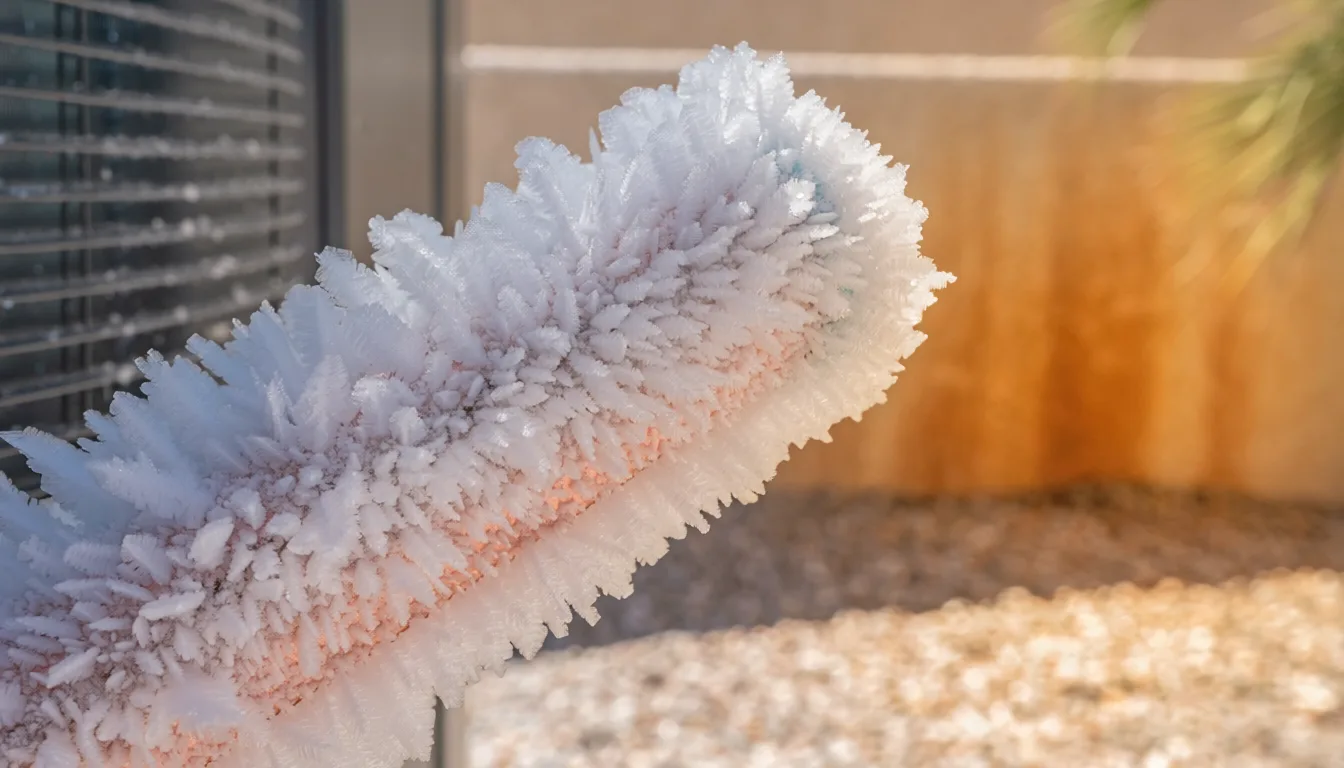
A frozen AC in Scottsdale summer has three common causes, and one of them can quietly lead to a $5,000 compressor failure if you don't catch it.
You walk over to your AC unit and find it covered in ice. In June. In Scottsdale. It looks like something went wrong in a different climate entirely.
It's not as rare as you'd think. Frozen AC units are a common summer service call in the Valley. And the problem isn't that your unit got too cold outside. It's what's happening inside the system.
Why Ice Forms on Desert AC Units
Your air conditioner works by pulling warm air from inside your home across a set of coils filled with refrigerant. The refrigerant absorbs that heat and carries it outside. It's a continuous loop: air moves, heat transfers, refrigerant cycles.
The key word is moves. Your evaporator coil needs a steady flow of warm air passing over it to stay above freezing. When that airflow slows down, or when the refrigerant level drops too low, the coil temperature falls below 32°F and moisture in the air starts to ice over it.
One hundred fifteen degrees outside, and your coil is building ice. That's the desert for you.
What Usually Causes It
Most frozen AC calls trace back to the same few problems.
- Clogged air filter. This is the most common cause, and the easiest to prevent. When your filter is packed with dust and debris, air can't move through freely. Less airflow over the coil means the coil gets colder than it should. In Phoenix's dusty summers, especially after a haboob rolls through, filters clog faster than most people expect. Check yours monthly, not seasonally, and consider a seasonal tune-up to catch other airflow issues before they cascade.
- Low refrigerant from a leak. Refrigerant doesn't get "used up" over time. If your system is low, that means there's a leak somewhere. Low refrigerant causes the pressure inside the evaporator coil to drop, which sends the coil temperature below freezing. This one won't fix itself, and topping off the refrigerant without finding and repairing the leak is just buying time.
- Failing blower motor. The blower pushes air over the evaporator coil. If the motor is starting to go (running slow, cycling oddly, or struggling in the heat), airflow drops and the coil ices over. You might not even notice anything wrong at first. The unit still runs, it just can't cool properly, and eventually you've got a block of ice where your coil should be.
Why You Can't Just Let It Melt and Move On
Here's the part that matters. When ice builds up on the evaporator coil, it blocks airflow entirely. Your system is now working harder to do nothing. Warm refrigerant that should be releasing heat outside starts returning to the compressor still cold, and the compressor is not designed to handle that.
Compressor failure is the worst-case outcome here. A compressor swap or full unit replacement can run $2,000 to $5,000 or more, depending on system size and refrigerant type. At that point you're often weighing repair against replacement on a unit that could have been saved. All because a frozen coil went unaddressed.
If you see ice anywhere on your AC system, turn it off, or switch to fan-only if your thermostat has that option. Fan-only circulates warm room air across the coil without running the compressor, which can speed up the thaw. Either way, let it thaw completely (usually a few hours) before you consider running it again. The underlying problem is still there waiting for you.
What to Check Before You Call
There's one thing you can check right now: your air filter. Pull it out and hold it up to the light. If you can't see through it, replace it before you run the unit again. Filters in the Valley should be 1-inch standard filters changed every 30 to 45 days in summer. Thicker media filters (4-inch, 5-inch) last longer, but they still need to be checked.
If you replace the filter, let the unit thaw out, and it ices up again within a day or two, the filter wasn't the only problem. That's your sign to call.
Get It Diagnosed Before You Run It Again
A frozen coil that keeps coming back means something else is wrong, and running the system through it puts your compressor at risk every time. Our AC repair techs can check refrigerant levels, test the blower motor, and find leaks before they turn into a much bigger bill. If your unit has already quit on a 110-degree afternoon, we also offer same-day emergency AC repair.
Give us a call at (480) 272-1317. We serve Scottsdale, Phoenix, Paradise Valley, Arcadia, Fountain Hills, Desert Ridge, and Tempe. Same-day appointments available during peak season.