Tips
How to Lower Your Cooling Bill by 20% This Month
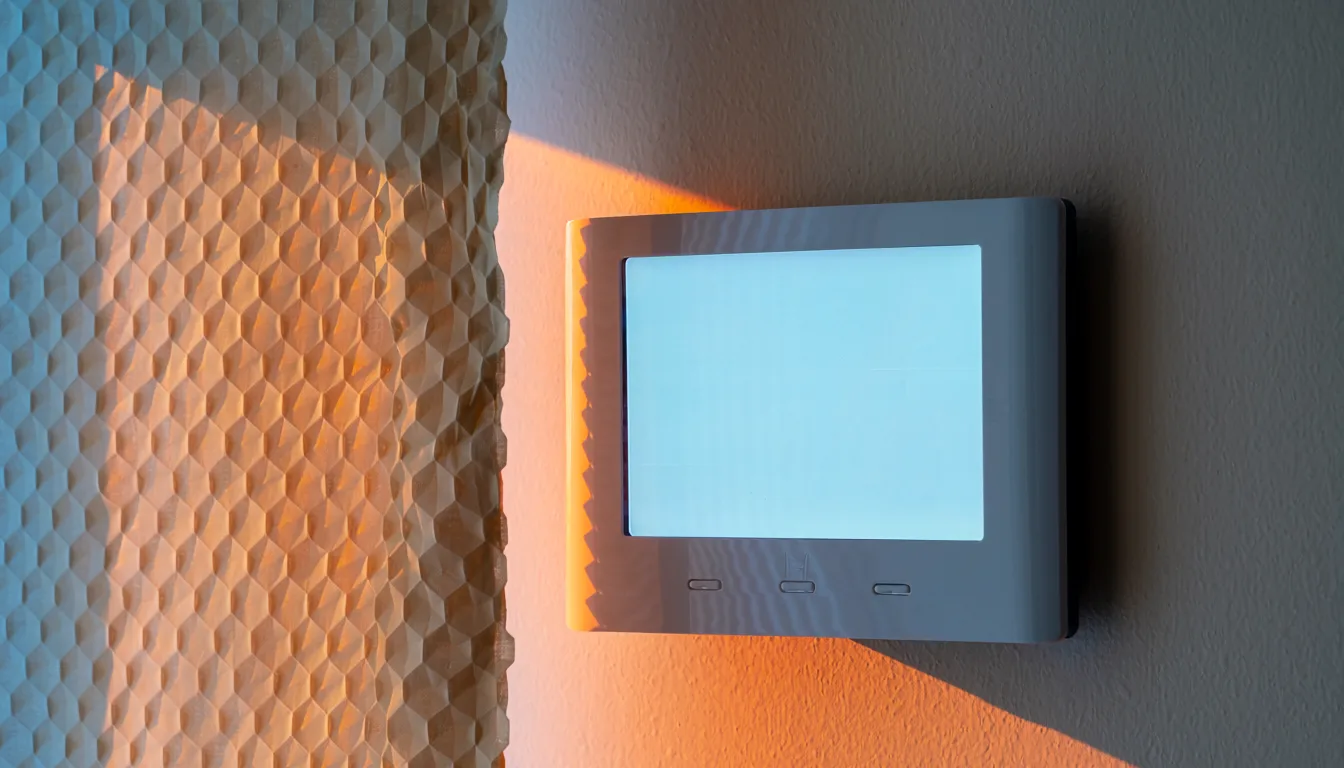
Your Scottsdale cooling bill doesn't have to hit $400. Set your thermostat to 78, shade west-facing windows, and run ceiling fans counterclockwise.
Your SRP or APS bill is about to hurt. In June, July, and August, Scottsdale homeowners in a typical 1,800–2,500 sq ft home routinely see electric bills between $300 and $500 a month. Some push past that. When temperatures stay above 110° for weeks at a stretch, your AC never really gets a break, and the meter never stops spinning.
The good news: there are a handful of things you can do right now that actually cut your bill. Not gimmicks. Real adjustments that reduce how hard your system has to work.
Start With the Thermostat
This is the single biggest lever you have. If you're running your thermostat at 72°, you're working your system far harder than necessary, and you're paying for it every hour of every day.
Set it to 78°. Not as a goal. As your actual daytime setting.
That sounds warm if you're used to 72°, but a few things help: ceiling fans, window coverings, and time. Your body adjusts. And your bill will drop noticeably, because every degree you raise the setpoint saves roughly 2-3% on cooling costs. Going from 72° to 78° is six degrees. That math adds up fast on a $400 bill.
If you're on an SRP Time-of-Use plan or an APS peak savings plan, this matters even more. Keep that thermostat up during peak hours (typically 3-8pm on SRP plans) and precool slightly before the window opens. Let the house absorb that cooler air before rates spike.
Block the Sun Before It Bakes Your Rooms
West-facing windows are the problem. From about 2pm until sunset, they take a direct hit from the afternoon sun, and that radiant heat loads up your home fast. Your AC has to run longer just to offset what's pouring through the glass.
Close your blinds or curtains on west-facing windows by early afternoon. Heavy curtains, cellular shades, or solar shades work best. Reflective window film helps too and doesn't require you to remember to close anything.
East-facing windows are the morning version of this problem. Close those early. South-facing windows get hammered all day in summer. If you don't have good coverings on those, it's worth fixing before next June.
Run Your Ceiling Fans the Right Way
Ceiling fans don't cool air. They cool people by moving air across your skin. That's an important distinction because it changes how you use them.
In summer, fans should spin counterclockwise (when you look up at them). That pushes air straight down and creates the wind chill effect. If a room feels comfortable with the fan on, you can raise the thermostat a degree or two and not notice the difference. That's free savings.
Turn fans off when you leave the room. Again, they cool people, not air. Running them in an empty room just wastes electricity.
Shade the Outdoor Unit
Your condenser, the big unit sitting outside, works by dumping heat from inside your home into the outside air. When it's sitting in direct sun on a 115° day, it's dumping heat into 115° air, and it has to work harder to do it.
Shading the unit with a lattice or a strategically planted shrub can help. One rule: never block airflow. The unit needs at least two feet of clearance on all sides. You want shade, not an enclosure.
A condenser that runs cooler is a condenser that runs more efficiently. It's a simple fix that adds up over a long summer.
Seal Your Ducts
Most homes in Scottsdale have ductwork running through unconditioned attic space. In summer, that attic can hit 150° or higher. If your ducts have gaps or loose connections, you're pumping 55° air through an oven before it reaches your vents.
Signs of duct leaks: rooms that never cool down evenly, a system that runs constantly, higher bills than neighbors with similar square footage. If any of those sound familiar, a duct inspection is worth scheduling.
Sealing ducts is one of the most cost-effective fixes a Scottsdale homeowner can make. It doesn't replace an old system. It makes your existing system do what it was designed to do.
The 20-Degree Rule (And Why It Matters)
Here's something a lot of homeowners don't know: a standard residential AC system can typically cool your home about 20 degrees below the outdoor temperature. That's not a flaw in your system. It's how residential equipment is sized for this climate. It wasn't designed to outrun a 115-degree day.
On a 115° day, the realistic floor is around 95° inside. Your system can't outrun that, no matter how new or well-maintained it is. If you crank the thermostat to 68° on those days, you're not getting 68°. You're just making your system run continuously, which wears it out faster and drives up your bill.
Plan around this during heat events. On the worst days, 80° inside might be the best you can do. Keep the fans running, keep the blinds closed, and protect the system from running itself into the ground.
This also means a well-maintained, properly charged system matters enormously. A system that's low on refrigerant or has a dirty coil might only manage 15 degrees of cooling below outdoor temp. On a 115° day, that's 100° inside. That's when phones start ringing and families head to hotels, or call us for emergency AC repair.
The Biggest Factor: System Efficiency
Every tip above helps. But if your system is dirty, low on refrigerant, running on a clogged air filter (which can also freeze your coil), or just aging out, you're fighting uphill. A system that's not running right costs more every single day it runs.
A seasonal tune-up isn't a sales pitch. It's a check: Is the refrigerant charge right? Are the coils clean? Is airflow where it should be? Is anything about to fail before the hottest stretch of the year? Catching small issues in May is a lot cheaper than an emergency call in July.
If you want to make sure your system is ready to handle the summer without killing your bill, give us a call at (480) 272-1317. We'll tune it up and tell you honestly what it needs. No upselling, just a straight assessment.
One Thing You Can Do Right Now
Check your thermostat setting and your ceiling fan direction before you do anything else. Those two things cost nothing, take five minutes, and will show up on your bill this month. Start there.