Emergency Tips
Emergency AC Repair: What to Do While You Wait
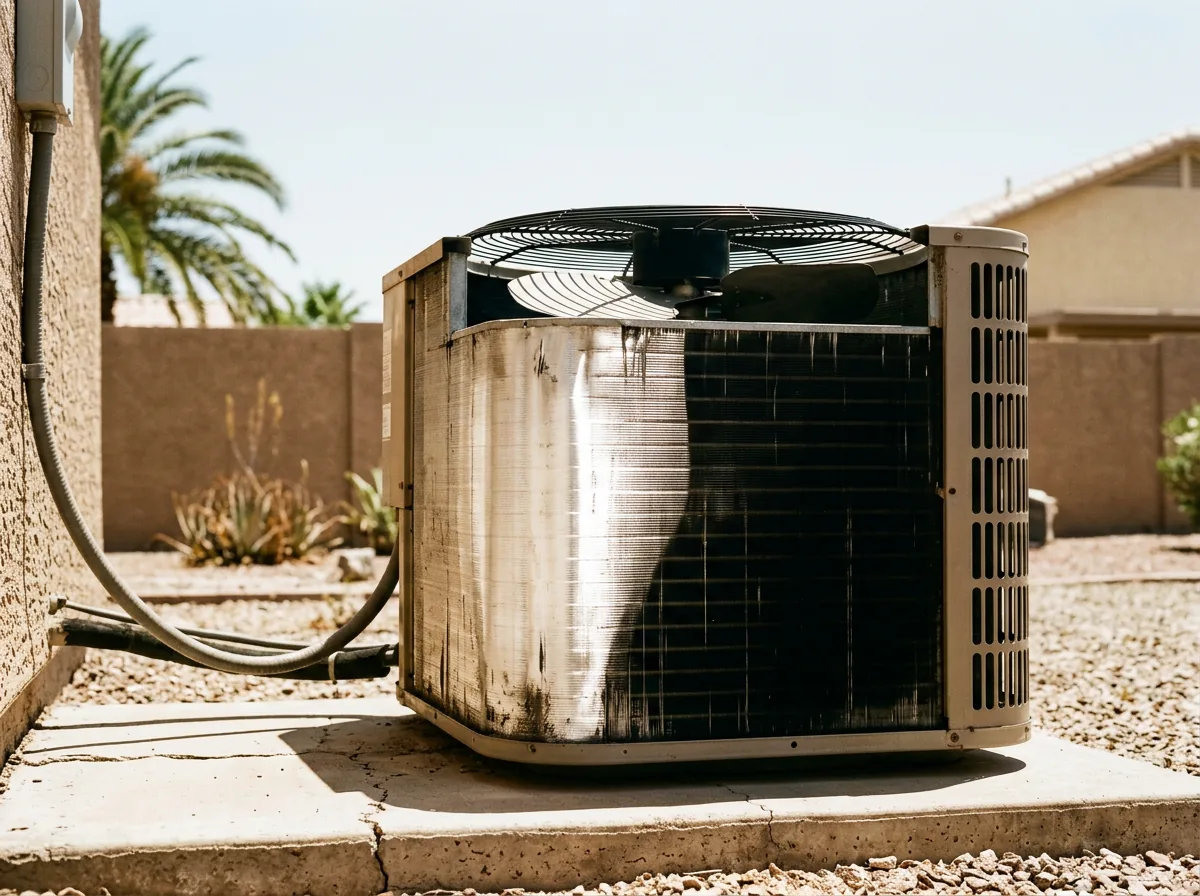
Your AC stops blowing cold in the middle of a Scottsdale summer. Here's exactly what to do while you wait for help to protect your compressor and keep your family safe.
Your AC stops blowing cold. You check the thermostat. Nothing. You go outside and the unit isn't running. And the thermometer on your patio reads 112°F.
Take a breath. Here's exactly what to do while you wait for help.
First: Shut the System Off
This is the one step most homeowners skip, and it matters. When an AC unit fails mid-cycle, running it again puts stress on the compressor. If the issue is an electrical fault, a refrigerant problem, or a frozen coil, forcing it back on can turn a repair into a full replacement.
Go to your thermostat and switch the system to OFF, not just Fan. Then flip the breaker for the AC at your main panel. You've done enough. Leave it alone until a tech can diagnose it.
Seal the House
Your home held onto some cool air when the AC stopped. Your job right now is to keep it inside as long as possible.
- Close every blind, curtain, and shade on south- and west-facing windows first. Those are your biggest heat sources in the afternoon.
- Work through the rest of the house after that. Any unshaded glass is letting heat in, so get it covered.
- Shut all exterior doors and windows. Even if there's a "breeze," outside air in June or July is 108°F. It's not helping you.
- Close interior doors to rooms you're not using. The smaller the space you're trying to keep cool, the better.
If you have blackout curtains, now's the time they earn their keep. If you don't, a blanket tacked over a west-facing window works. Not pretty, but effective.
Find the Coolest Spot in the House
Heat rises. Rooms over a garage or directly under the roof deck heat up the fastest. Your best bet is usually the lowest level of the house, away from exterior walls, with the least glass exposure.
If you have a single-story home, interior rooms like a hallway, bathroom, or closet will hold cool air longer than open living spaces. It sounds strange to camp out in a hallway, but in a real heat emergency it's a smart move.
Fans Help. Until They Don't.
Ceiling fans and box fans don't cool air. They cool people by moving air across skin. That's a real difference, and it matters when temps climb.
If the indoor air is already hotter than your body temperature, a fan blowing that air on you can actually make heat stress worse. Keep an eye on how you feel. If circulating air feels good, run the fans. If the indoor air starts feeling like a convection oven, turn them off and focus on staying hydrated instead.
One trick that works: put a shallow pan of ice in front of a box fan. It won't cool a room, but it'll drop the air temperature on your face enough to feel like relief.
Drink Water. Seriously.
In a Phoenix-area summer, dehydration can sneak up on you fast, especially if you're not sweating noticeably because the humidity is low. You might feel fine right up until you don't.
Drink water every 20 to 30 minutes, even if you're not thirsty. Avoid alcohol and heavy caffeine. If you're feeling dizzy, have a headache, or notice your skin feels hot and dry rather than sweaty, those are warning signs to take seriously.
Know When to Leave
Waiting it out is fine for a healthy adult in a house that's 85°F and climbing slowly. It's a different situation if:
- You have elderly family members in the home. Heat stroke risk rises sharply for adults over 65.
- You have infants or young children. Kids can't regulate body temperature the way adults can.
- Anyone in the home has a heart condition, kidney disease, or takes medications that affect heat tolerance. Some common blood pressure meds and diuretics make heat stress worse.
- You have pets, especially flat-faced breeds like bulldogs or pugs, or animals without access to cool water and shade.
- Indoor temperatures hit 95°F or above.
In those cases, don't wait. Get to a cool location. A Scottsdale library, a grocery store, a casino, a friend's house. Maricopa County opens cooling centers during extreme heat events, and they're free. Keeping your household safe is what matters most. The AC repair can happen while you're somewhere comfortable.
If anyone is showing signs of heat stroke, which includes confusion, no sweating despite the heat, rapid pulse, or loss of consciousness, call 911 immediately. That's a medical emergency, not an HVAC problem.
What Not to Do
A few things homeowners try that tend to backfire:
- Don't open the windows at night unless it's actually cooler outside than inside. Check a weather app before you open anything.
- Don't run the oven or stove. It dumps heat directly into your living space.
- Don't keep cycling the AC on and off trying to get it to work. If it failed, let it rest until a tech looks at it. (If you want to avoid this situation next summer, here's how to get your AC ready before the heat hits.)
- Don't wait to call for help if your situation is deteriorating. Same-day service exists for a reason.
Get Help Fast
A broken AC in a Scottsdale summer isn't an inconvenience. It's a safety issue. Most AC failures we see are things that can be diagnosed and repaired the same day: capacitors, contactors, clogged drain lines. Refrigerant issues are usually diagnosable same-day too, though if there's a leak involved, locating and fixing it can sometimes require a return visit once we know what we're dealing with. But you won't know until someone looks at it.
We offer same-day emergency AC repair throughout Scottsdale, Phoenix, Paradise Valley, Fountain Hills, and the surrounding area. Our trucks are stocked with the most common replacement parts, so we're not showing up just to schedule a second visit.
Call us right now at (480) 272-1317. We'll get someone out to you fast.
One Thing You Can Do Right Now
While you're waiting, take a photo of your air handler (the indoor unit, usually in a closet or utility room) and your outdoor condenser. If you can see your unit's model number on the data plate, photograph that too. When the tech arrives, having that information ready saves time and gets your system back online faster.